Exploring Georgetown

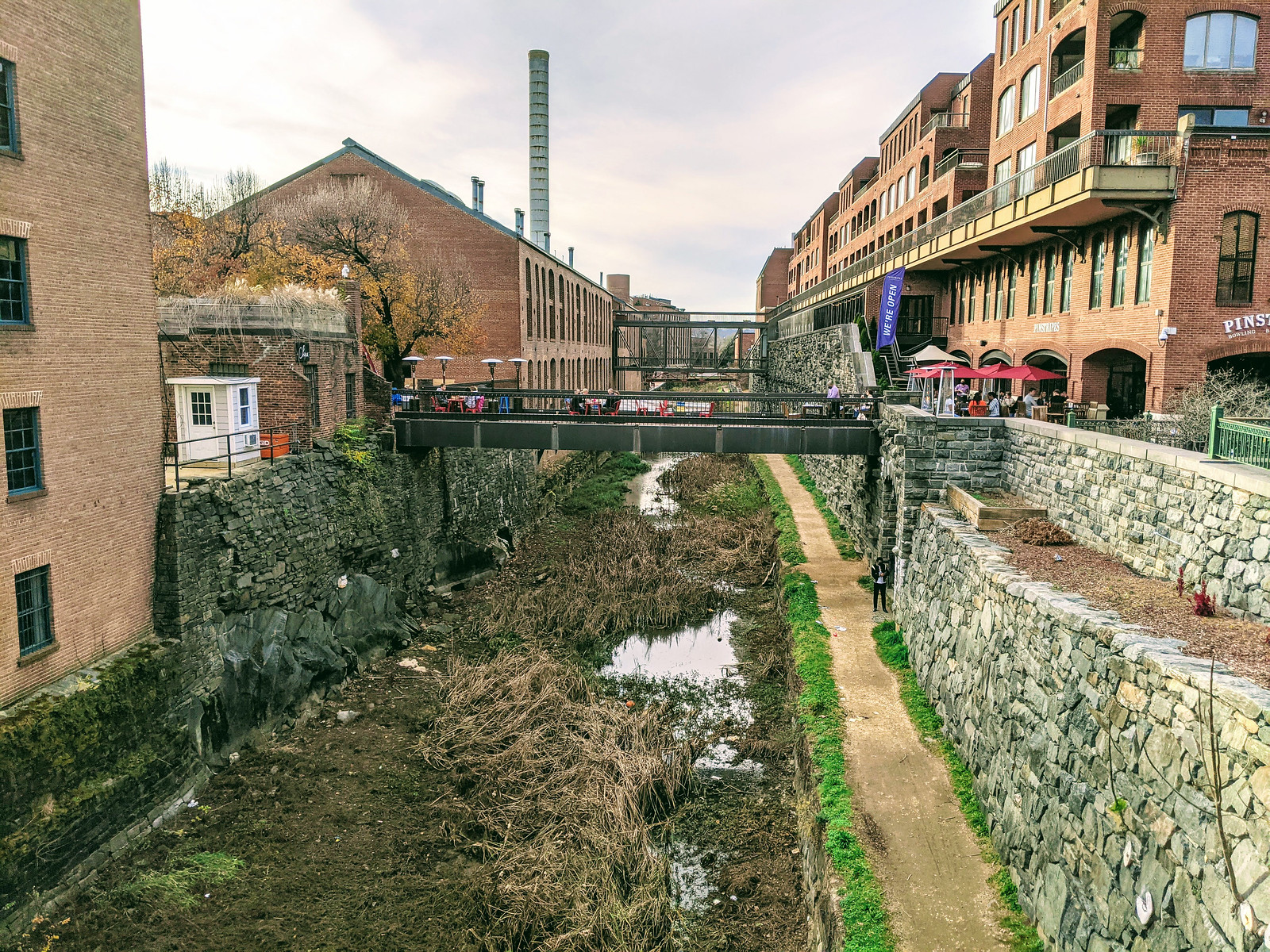
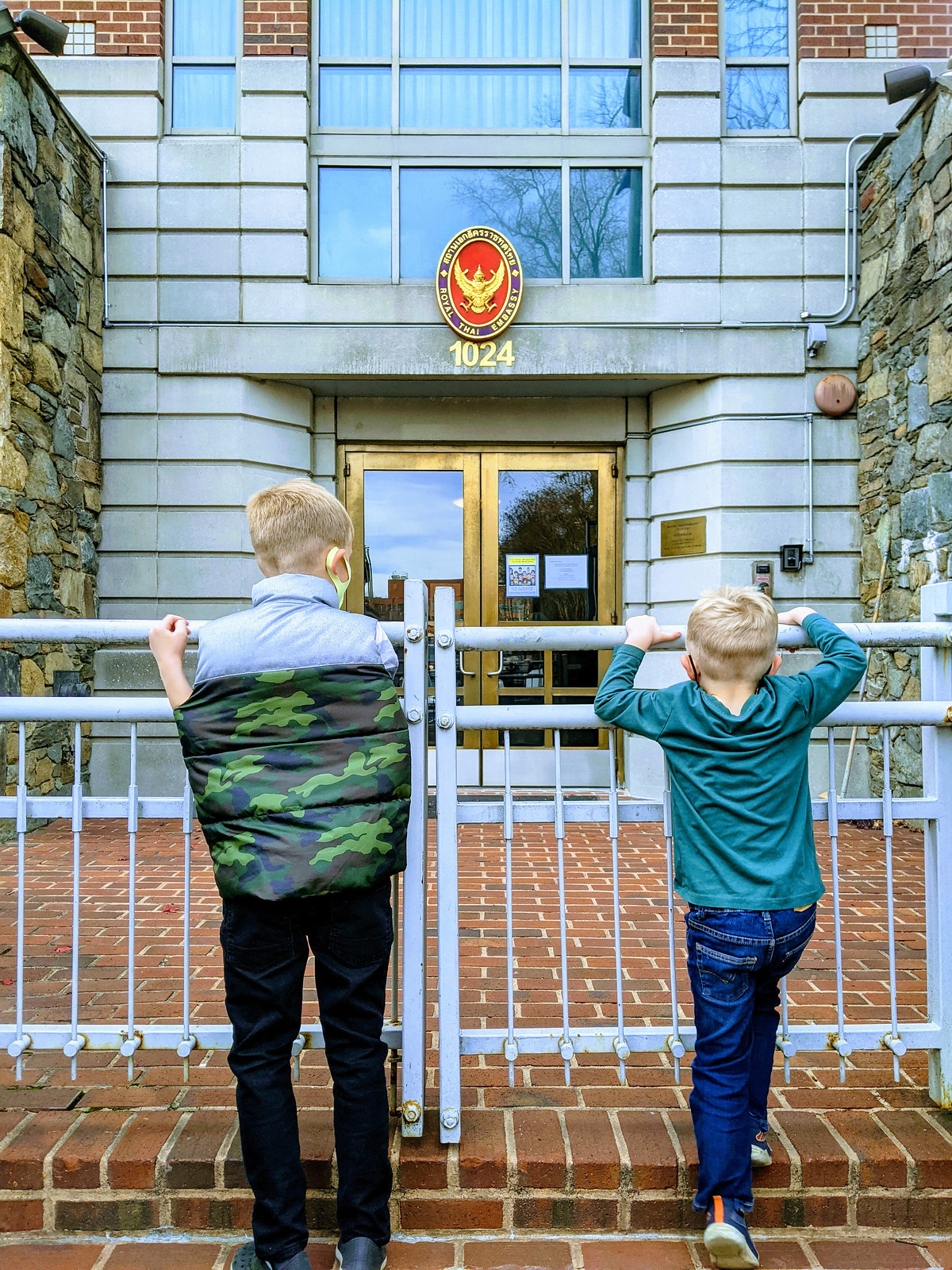
On Sunday, I took Caleb and Joshua to explore Georgetown. I promised magical staircases and secret doorways, and Georgetown delivered beautifully. We descended the stairs made famous in the end of the Exorcist (a story I omitted to tell the little boys), explored the campus of Georgetown University, and spent a lot of time walking along the riverfront.

There were a few too many people to be comfortable during a pandemic, but we kept our masks on and kept to ourselves.

The highlight for the boys was finding a labyrinth in the park. A labyrinth is supposed to be an Irish tool for spiritual reflection, but the boys had enormous fun playing with it as a maze. We even encountered a breakdancer who danced for us in the middle for a few moments.

At the end of the day, though, all the boys wanted to do was find a playground. We stopped at an empty playground by a church on the way home, and they were perfectly content.

The whole day reminded me that small adventures are still adventures.

Western Mass in the Fall

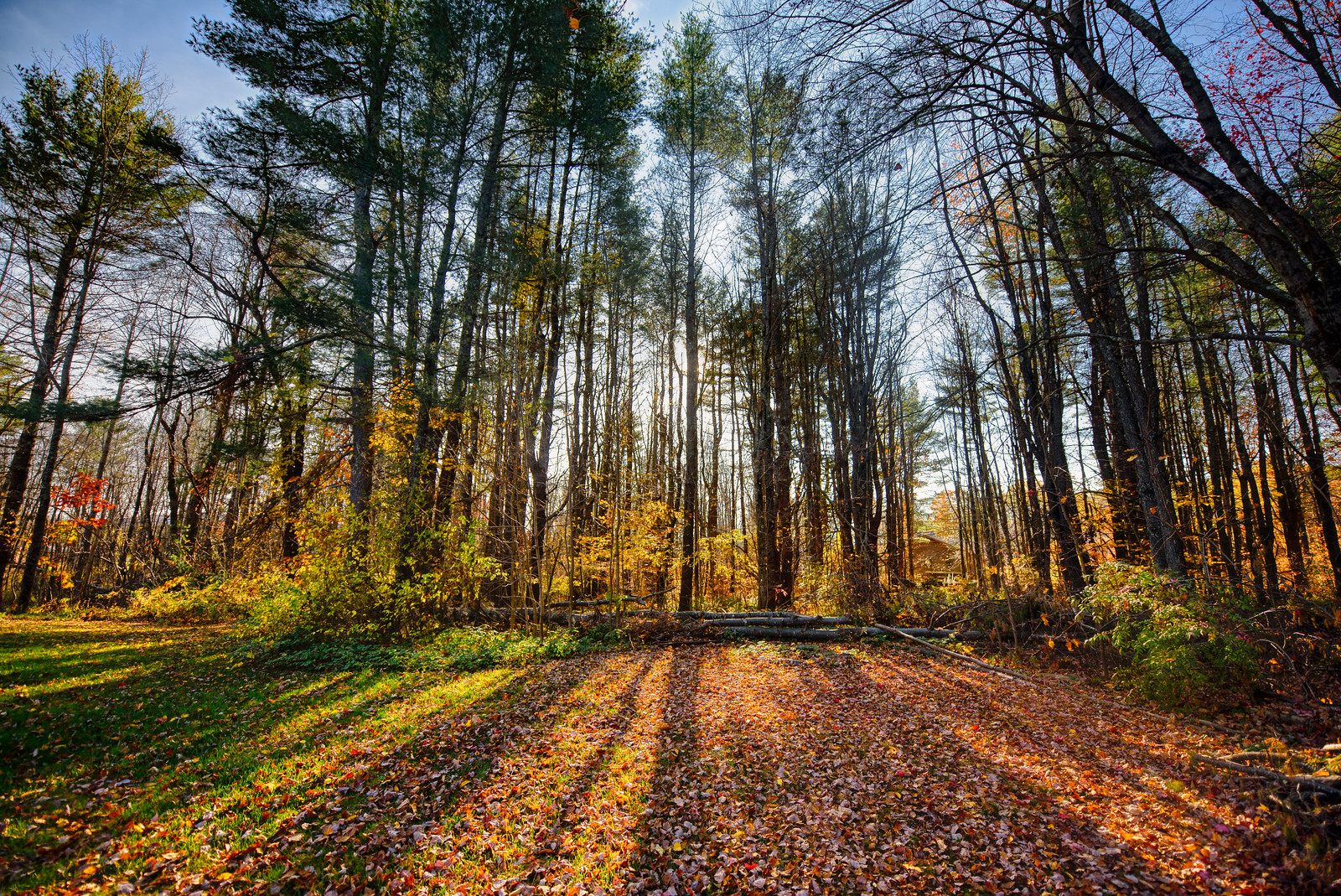
This fall, we had the chance to visit some very good friends out in Western Massachusetts. We were specifically in Mass because it’s beautiful there in the Fall. Thanks for hosting us, Tim and Rach! You live in such a beautiful spot!

What COVID has taken… and what’s left

It’s Saturday during a COVID holiday season in Arlington, VA, and some things still look normal. As I drive, I’m enjoying Christmas lights diffusing their way through an early-morning fog. There are a few lights and decorations around the shopping areas of Arlington, but I can’t wondering help what a normal Christmas would look like here. COVID has taken away the normalcy of our Christmas traditions this year.

I drive past a church. Since arriving in the Washington DC area this summer, we haven’t been able to darken the door of a church. I grieve when I realize that we’ll probably never get a chance to visit this church and meet its people – and we’ll probably never experience the variety of churches (from Quaker to Orthodox) that are part of the communities around Washington DC. COVID has stolen the opportunity to enjoy the in-person richness and deep ceremony of religious observance.

One of the things I was most anticipating about moving my family to Washington DC was sharing with them all the museums and historical sites I’ve enjoyed in the past. To be fair, we’ve had tremendous experiences as the good people at Mount Vernon, Manassas, and Monticello worked to reopen with safety measures. The day the National Museum of American History re-opened, we were there with timed entry tickets. I thanked an employee for his work, and I flushed with tears when he welcomed me back and told me that all their work was for our benefit. His eyes said what his voice couldn’t: that he wanted the people back as much as they wanted to be there. But those museums are closed again, and the brief taste of re-opening has increased our longing to return to normalcy. COVID has closed our public spaces, making it more difficult to share our heritage.

His eyes said what his voice couldn’t: that he wanted the people back as much as they wanted to be there.

Of course, others have lost far more than me. Millions know someone who has died from COVID. The fact that they were previously sick or healthy doesn’t change the fact that they’re now gone. COVID has robbed us of our loved ones. Many people will live with still-unknown long-term consequences from this disease.

More millions have lost jobs, savings, homes, and businesses during this time. Though the stock market is buoyed along by the expectation that we’ll return to normal some day soon, the savings accounts of many Americans may never recover. Every stadium in America could be filled with those face hunger or eviction, and a good price on the S&P 500 doesn’t calm the rumblings of a child’s empty stomach, or the despair and the shame of a parent who can’t afford to feed her. COVID has taken the food from many bellies, and tossed many out of their homes in the world’s cruelest Christmas gift.

But for as much as COVID has taken, it’s left some things behind. Masks aren’t enough to block a stranger’s smile. Businesses have innovated at near-unbelievable pace. Many (not all) children have gotten more parental attention.

Though there have been deep divisions in America over how to handle a pandemic, we still direct most of our disagreement at governors far away or and abstractions like governance structures. The real flesh-and-blood people who work at our grocery store, deliver our food, staff an emergency room, or drive an ambulance are our new heroes. The term ‘essential worker’ is an overdue recognition of how important many previously unheralded members of our society are.

The irrepressible ingenuity of American business has been on full display this year. Despite the economic devastation, there’s been a raft of new services that will outlast the pandemic. Traditional grocery stores now offer curbside pickup, everything carry-able is now deliverable, online shopping is now the norm, we’ve learned a lot about how to do online learning, and manufacturers have pivoted to make masks and ventilators and any number of new products. There are always people who suffer in the process of creative destruction that Joseph Shumpeter popularized, but the creation part of the equation leaves an overall better world in its wake.

For those who have been able to work from home, there’s another side to the insanity coin that is living (and working) full-time with children constantly at your elbows. The minute I take a break for lunch or stop working for the day, my kids are there wanting to spend time with me. I can sit on the ground and play a simple game of “roly-ball” with my 4-year-old instead of walking with colleagues to a parking lot to commute home or go to an after-work happy hour. I’ve lost the chance to network and make friends with some amazing colleagues. While I grieve that, my children will look back at this pandemic as a time when they had the most precious gift I can give: time and closeness during their formative years. My 4-year-old, Joshua, will know what it’s like to have Daddy fully available. He’ll live the rest of his life with the unshakeable foundation of the knowledge that when it matters, I’m there for him. When I’m on my death bed, that’ll matter more to him than the size of my savings account.

There’s another side to the insanity coin that is living (and working) full-time with children constantly at your elbows.

COVID has stolen a lot. We owe it to ourselves and each other to grieve with those who have lost: opportunities, jobs, and loved ones. But it would a further tragedy if we didn’t acknowledge what COVID has left behind.

So friends, this Christmas season, let’s do what we can: see each other with compassion, tell you loved ones what they mean to you, take measures to protect others, give the gifts that don’t cost money but always outlast our savings accounts. Not all of us will make it out of this. But those who do carry the responsibility to remake the remaining world into a better place.

We’re up to it. I’ll see you on the other side.

Lessons from History: Division

Our nation is divided. It’s not the first time. If we look to the past, there are some hints about how to handle it.

Yestersday, I made a pilgrimage with my family to the home of Thomas Jefferson. Next to the bed where he died, I told my children about his remarkable relationship with John Adams.

The second and third Presidents of the United States had a long relationship which soured into bitterness. First as delegates to the Continental Congress and later as diplomat in Europe, these two very different people became close friends. But in the years that followed, the business of running a nation exacerbated their differences of style and perspective. 

The presidential election of 1800 was nasty and personal. It was part of the emergence of political parties in our country, with the personal and political differences of Jefferson and Adams dividing people into Jeffersonians and Federalists. That rift persists today, with Republicans and Democrats differing on policy and persona; each accusing the other of bad faith and bad thinking.

The former friends, Jefferson and Adams, went radio silent for 12 years. Jefferson overturned a bunch of Adams’s legislation, and I’m sure that they thought they were through with each other.

But with some cooling off and the benefit of hindsight, these two wise men re-established contact. Tellingly, it was their former personal connection that provided a basis for intial contact. But their hurts were deep, and it wasn’t long before they were re-litigating their policy differences. By then, though, something had changed. They were growing old, and their peers from the revolutionary generation were dying off around them. Now, they were willing to listen to each other. 

Increasingly, they realized that they shared an experience greater than their differences. As these two imperfect but wise men approached death, they considered their legacies. And they found that their legacies were intertwined. They never ‘solved’ their policy differences, but they did forge a beautiful friendship. Though they never saw each other in person again, they died on the same day: July 4, 1826 – 50 years to the day after the signing of the Declaration of Independence on which they had worked together. Adam’s last words, and maybe some of his last thoughts, were of Jefferson: “Thomas Jefferson still lives.”

What can we learn?

  1. The things we share are greater than our differences. Looking to those things will make us more open to hearing each other.
  2. Personal relationships can bridge political divides. Don’t start talking policy with someone before you spend some time hearing their story. If you don’t know anyone from the opposite party, check out Braver Angels. This fantastic group can introduce you to someone you disagree with, but whom you’ll probably like.
  3. How we handle ourselves will impact the legacy we leave behind. The comment you’re about to leave or the Tweet you’re about to send will become part of our national discourse, and part of the country we’re leaving for our children. Speak and write as if history is watching.

When you’re on your death bed, the political fades away and the personal remains. Live with your fellow citizens in a way that allows you to die with dignity and peace, leaving behind a country that’s better than the one you found.


Note: I’m not an historian, and I don’t claim inerrancy in my understanding or my facts. If you want to read more about these fascinating characters from history, I recommend a few books:

Leave a comment to share your thoughts or your favorite books about Jefferson and Adams!

Zooming into the Foreign Service

When last we talked, dear reader, I (Andrew) was waiting to join the Foreign Service. Like a road trip with no speedometer, I had a predictable destination but an uncertain timeline.

The folks at the State Department’s Bureau of Global Talent Management (GTM) have been working tirelessly to solve a range of logistical and legal issues to allow me and my classmates to join. Foreign Service Orientation, commonly referred to as A-100 and named for the room in the State, Navy, an War building where it the class was first held, has never been held virtually before. And swearing an oath of office for government service virtually hasn’t been permitted until very recently. But GTM and the team at the Foreign Service Institute (FSI) have innovated at lightning speed to onboard us and move forward the State Department’s mission of advancing the interests of the American people.

Today, I swore my oath of office and officially joined the State Department as a Foreign Service Officer! It’s not the first time I’ve sworn that oath, and I take it very, very seriously. The swearing in happened remotely, using Microsoft Teams. It was halting and awkward, but no less meaningful.

The swearing of the oath calls to mind the time that I stood aboard the flight deck of the Coast Guard Cutter Munro and swore the same oath to join the US Coast Guard. As then, the oath is one of devotion and implies the ideas of service and self-sacrifice. Those doing the swearing give up some measure of freedom so that others may retain a full, unmolested measure of the same.

The road ahead remains uncertain, but it’s the uncertainty that I’ve been expecting. As disappointing as it was to not join the State Department at the Main State building in Washington DC, , my swearing-in was boiled down to its essence. With all the trappings stripped away, all that remains is my oath. It’s deadly serious, it’s beautiful, and it’s sacred. It ends with a divine supplication, and I don’t doubt that I’ll need the assistance. So help me God – I’m a diplomat.

The 3rd Battle of Winchester

Sometimes, Mom needs some quarantine quiet to get a little work done. What’s a housebound dad with few connections to do in the middle of a pandemic in rural Virginia? Take the kids to see Civil War battlefields, of course! I found the location of the 3rd Battle of Winchester and took the kids to see it this evening. It was good exercise, good time together, good to honor our past, good to connect with nature, good to slow down.

What’s the solution to income inequality?

In December, Lisa and I visited the palace of Versailles, the residence of French royalty from Louis XIV to Louis XVI, or 1682 – 1789. It was awesome – and terrifying. The opulence on display was truly breathtaking. Marie Antoinette, it turns out, had an entire village built in the garden out back so she could cosplay as a commoner. (No, I’m not joking.)

But the entire site exists as a monument to hubris.

You see, at the same time we started listening to Charles Dickens’s A Tale of Two Cities. Written 80 years after the French Revolution, Dickens’s descriptions of the grinding poverty found elsewhere in France while the palace was occupied by Marie Antoinette are striking. They paint a picture of income inequality that should terrify anyone who might be considered an economic elite.

The French Revolution illustrates conditions that can be considered an upward boundary on income inequality. Once inequality hits this boundary, social contracts fail and the laws that govern society unravel (or dissolve entirely).

Effort to reduce income inequality (or at least mask it) aren’t only for the poor – they also serve to protect economic elites from the fate of Louis XVI. The rich kids of Instagram have the opposite effect.

So if income inequality has some sort of practical upper boundary, what about conditions below that threshold? Is there a solution to income inequality?

I think of income inequality as a description or measurement, a bit like temperature. Is it ever the wrong temperature? No, because temperature is descriptive; it doesn’t have a moral dimension. But can it be too hot or cold for survival? Absolutely.

The question in the title comes from a friend, who asked me about it on Facebook. I’m going to reframe it thus: “What sort of economic policies should we pursue?” I have a few reasons for this. First, a measurement or description can’t be ‘solved’, in the same way that you’d never try to solve a temperature reading. Second, the real world needs solutions that are directional instead of idealistic. We should be informed by ideals, but policy should be able to take the real world and move it in the direction of those ideals.

The wisest economic policy prescription I’ve read come from the book Why Nations Fail: The Origins of Power, Prosperity and Poverty by Daron Acemoglu and James Robinson. This book describes societies from colonial America to the Soviet Union to North and South Korea. It spends a lot of time talking about societal elites who create extractive, oppressive political systems that create the sorts of injustices that led to the French Revolution.

The antidote to this is to focus economic policies on inclusivity. When everyone is able to participate in an economy (start a business, own property, buy things and sell them at a profit), you have the conditions for a more just society. When some are excluded from full economic participation (for example, not being able to own property because of gender or tribal affiliation), injustice follows. Embedded in this is the idea that economic participation requires political participation. People who can’t vote will find themselves excluded from full economic participation pretty quickly.

This is both achievable and realistic. It avoids the pitfalls of forced income redistribution, which leads to a stifling of innovation and an overall lower standard of living. It also avoids the pitfalls of an elite-driven system of monopolistic capitalism, which keeps people trapped and unable to be economically mobile.

This, then, is the basis for any economic policy I consider: does this policy move us toward or away from economic inclusivity?

Help me out, dear readers. Add to this conversation. What books have you read that helped your thinking in this area? What am I missing?

Church in the age of COVID-19

This morning we tuned into online church and it was a fascinating experience. It was different from the way we normally participate and I wonder how many of these differences will persist into a post-COVID world.

Church choice

When we decided to attend online church, we had our choice of different churches. Without the strictures of geography, we could attend any church in the world. We actually attended parts of two church services. I wonder if churches will begin competing for viewers/attenders/congregants? With geography irrelevant, what will be the main attractors? Will churches take some of the money that they’ve spent on buildings over the years and pour it into online delivery innovations? How many church attenders will continue attending online instead of going back into the old offline modality?

Format

The activities within a western church service haven’t changed much in my lifetime. There is a time of singing, some announcements, a greeting time, and a sermon or message. None of this format is prescribed by scripture, though there are loose precedents in the book of Acts for singing, praying together, and preaching. When the delivery is different, how will these elements shift or change? Using Facebook live, we were able to leave comments that everyone can see. In the future, will offline church attenders expect a tech conference-style backchannel discussion? How will pastors change their sermons when everyone else has a real-time feedback channel?

Participation

While we participated in church we built Legos, journaled, and ate lunch. Far from distracting from what was happening in the church service, this allowed us to take care of needs (especially for the little ones) that would have otherwise distracted us while we were sitting in the pews of a physical church. I found this to be overall a much more family-friendly experience. I wonder: where and how will we attend church when this COVID-19 pandemic is over?

Update: the Foreign Service waits for COVID-19

My entry on duty with the Foreign Service was supposed to happen on Monday, March 30. A lot of things were supposed to happen before the Corona virus starting spreading.

When I received my official invitation on February 19 to join the State Department’s 202nd A-100 class, I had one month and 11 days to wrap up my entire life and get my family moved to Washington D.C. I quit my job, re-negotiated all my commitments, we got rid of many possessions and packed up the remaining ones, made arrangements to take care of our house, and started planning an epic road trip across America. I signed official employment contracts and began other HR preparations for Entry on Duty (EOD). This was the opportunity we’d been pursuing for 7 years (longer than the lifetimes of our two youngest children). To say that we were excited would be akin to calling the Mississippi River a small stream; we were thrilled.

The pack-out was painful, intense, and very good. Getting rid of so many possessions and making decisions that had been deferred (sometimes for years) lightened our souls and started readying us for the adventure ahead. Unfortunately, it also consumed us. While we were focused inward, a storm was brewing in the outside world.

“Adventure is nothing but hardship in the past tense.”

– Andrew Shinn

The Corona virus first popped up on my news feed in early January while I was planning a trip for Fresno Pacific MBA students to Malaysia and Singapore. It’s a trip that I’ve led for the past three years and was handing off to a wonderful colleague. But my risk assessment hat was on, and I was hoping that this oddly-named Asian problem (which reminded me of SARS) wouldn’t be disruptive to our travel plans. I had no idea how this distant storm would come to define our future reality.

After spending Fresno Pacific’s spring break packing, I was looking forward to one last day in the classroom with my students at Fresno Pacific and Fresno State. Unfortunately (for me), both schools cancelled classes that week while figuring out how to respond to the growing epidemic. I didn’t get the chance to say goodbye to most of my students. But our plans were firmly in place, and the intensity of our personal change kept us from focusing too much of the disaster that was approaching.

On March 18, we began our trek across the United States. We were planning to take a more leisurely drive, stopping to see family members in various states, taking in and enjoying the vastness and diversity of our country.

We were 900 miles into our trip when we received the news that cast our future into doubt: the 202nd A-100 class was being postponed. We didn’t know what that meant and neither did the folks at State who were making these decisions. The Corona virus had become a pandemic, and none of us knew at the time what that would mean.

What we did know is that we had left everything behind, and didn’t have much to return for. Our leisurely drive across the country became a race against the clock, as we began trying to outrun the state closures. We left California the day before a shelter in place order, and drove across Ohio hours before it closed. In Chicago, we bought a traditional Chicago pizza and ate it in our van in a parking lot. Our meals all took place in the car as we focused more on eating miles than calories. Some of the hotels where we stayed told us that we were some of the only guests they had; they were seeing occupancy rates as low as 3-4%.

We arrived in Washington DC far ahead of schedule with no real plan. We spent one depressing night in an Alexandria hotel, then found a lovely Air BnB in Arlington for the rest of the week. We continued to communicate with the State Department. During that first week it became clear that I wouldn’t be starting work any time soon. They didn’t have the capability to swear people in remotely, and all of HR procedures they’ve developed over years couldn’t be retooled to work remotely in a matter of days.

The State Department reiterated their commitment to bring us on board, but still isn’t sure when that will happen. They’re projecting that it’ll be sometime in the next 12 months.

In the meantime, a fellow A-100 colleague connected us with his parents, who offered us very reasonably-priced housing in Winchester, VA. We’ve moved to a comfortable 3-bedroom townhouse in rural Virginia, close to the West Virginia border. After a few days of scrounging furniture from Craigslist and being blessed by our new hosts’ generosity, our household goods arrived. We now have clothes and a few other possessions.

We’re planning to shelter in place here for the moment. The governor of Virginia has closed the state until June 10. It seems prudent for now to be in a rural area. Food and necessities (like toilet paper) are available here for the moment, and we’re comfortable and safe.

“The best laid schemes of mice and men
Go often askew,
And leave us nothing but grief and pain,
For promised joy!”
– Robert Burns, from ‘To A Mouse’ in 1785

We’ve experienced this pandemic and its fallout differently than everyone else. We were already planning on disruption and change; this is just not the disruption that we were planning for. Our framing of this as an adventure should have given me pause; my definition of adventure is, “hardship in the past tense”.

Our hardship isn’t onerous, though. It’s a deviation from what we expected, but there’s a reason that we trot out that old quote about the best laid schemes of mice and men. We’re together as a family, our needs are cared for, and we’re about as safe as anyone can be in these days. We have the expectation of interesting future work with the State Department and some unknown number of months in which to prepare for it. Overall, life is good.

New Adventures: The US Foreign Service

Editor’s note: This was originally posted to Facebook on February 24.

Friends, I’m excited to announce the start of a new adventure. I’ve accepted an appointment to be an economic Diplomat with the U.S. Foreign Service. This means that I’ll be representing my country overseas. Lisa and the kids will be moving with me.

I’ve walked away from two previous jobs that I loved: one with the U.S. Coast Guard and one with Shinn Photography. Now I’m leaving another. I’ve loved Fresno Pacific University and the community here. Teaching has been a growing and fulfilling part of my life. I can’t say enough good things about this institution or its people!

In the near term, we’ll be moving to Washington D.C. We leave on March 18 for a road trip across America. After some training in DC (6 months to a year depending on language), we’ll head to another part of the world. I’ve agreed to serve anywhere my country requires, and I don’t have any indication about where that’ll be; other than the fact that it’ll be somewhere with a U.S. Embassy.

The mission of a U.S. diplomat in the Foreign Service is to promote peace, support prosperity, and protect American citizens while advancing the interests of the U.S. abroad. I’ll do economic diplomacy, advocating on behalf of US companies and US interests. My policy portfolio will probably include areas like trade treaties, energy policy, health, science, and technology policy, and other random bilateral and multilateral policy areas that don’t fit cleanly into other categories.

If you want to read a bunch of stories about exactly what US Diplomats do, check out America’s Other Army: https://amzn.to/2vcTEXK. Another really good, systematic approach to the topic can be read here: https://amzn.to/2VrFTjQ. If you want the movie version, see this recent documentary: https://www.youtube.com/watch?v=QK_yRCrwp04. If blogs are your thing, here are a bunch of them: http://afsa.org/foreign-service-blogs.

We’ll be wrapping up everything in our lives in California over the next three weeks. We are selling a LOT of stuff (including two vehicles) at several garage sales and online. In the meantime, we’re also trying to connect with many of the people we love and see in our California lives. If you’re in Central California, we’d be happy to hang out (if time permits). If we don’t see you, it’s only because time is finite, while our love for you is less so.

Thanks to those of you who have supported us on this journey so far! We began the application process in 2013, so your patience with us has been long.

Prayers, of course, are appreciated!